Wander uphill with no plan
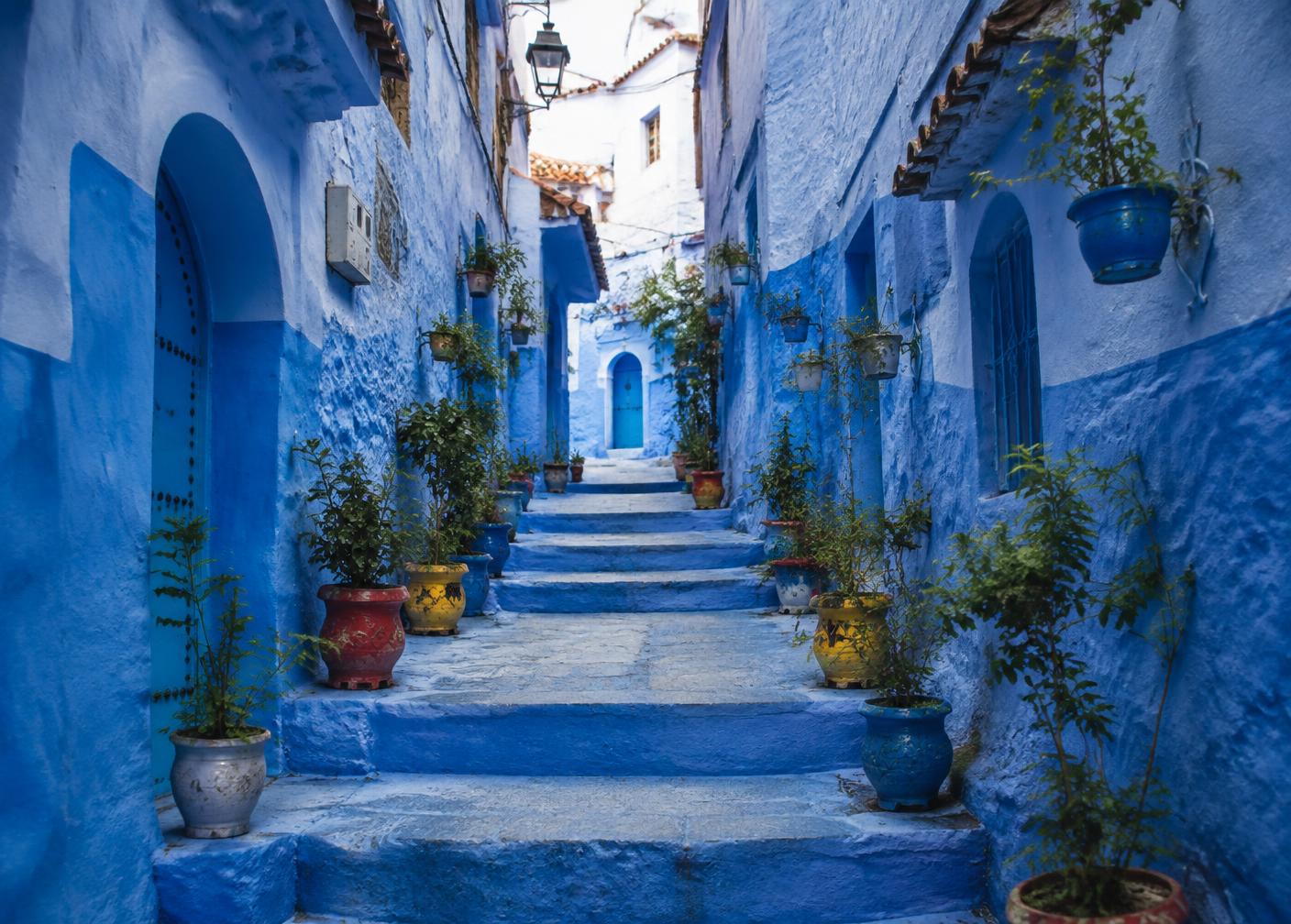
The best Chefchaouen experience is unplanned — climb, photograph, drink mint tea when you get thirsty, and let the blue lead you rather than a map.
The Rif Mountains · The wanderer's guide
Every wall painted blue, every alley a photograph, a hill town built for slow mornings.
01 · Overview
Chefchaouen doesn't try to be anything other than beautiful. The blue wash covering the medina's walls, stairs, and doorframes turns every turn into a small discovery, and the town's slower pace — mountain air, Spanish-Andalusian architecture, hardly any traffic — makes it the reset button after Marrakech and Fes. I spent an entire morning just following the blue uphill with no destination in mind, which is more or less the correct way to visit.
Ginger's 3-day sample plan
02 · Best time to wander in
Mild mountain air, fewer crowds
Chefchaouen sits in the Rif Mountains, so it's noticeably cooler than the cities to the south — a welcome break in high summer, but bring a proper layer for spring and autumn evenings. Winter brings rain and occasional Rif snow at altitude.
03 · Top adventures
The best Chefchaouen experience is unplanned — climb, photograph, drink mint tea when you get thirsty, and let the blue lead you rather than a map.
A 30–45 minute walk out of town to a hilltop viewpoint over the whole blue medina, best timed for golden hour. Wear proper shoes; the path is rocky, not paved.
The main square, ringed by cafés and the red-walled kasbah, is where the town actually lives — slow coffee, people-watching, and the best vantage for the kasbah's small museum and garden.
Handwoven wool blankets and djellabas from the Rif region are a genuine local craft, sold in shops that are far less pushy than Marrakech's souks.
Day trips & tours
Times and distances are approximate — check before you book, and leave room for a slow lunch.
About 30 km · 45 minutes, then 2–4 hours walking
Best: Late spring to early autumn
Akchour is a green, rocky valley with clear pools and a trail that follows the river upstream to a series of waterfalls. The walk to the first falls is fairly easy; reaching the higher ones, or the natural rock arch known as God's Bridge, takes more effort and good shoes. Small cafés along the way serve tagines and mint tea. Come on a weekday if you can, as it's popular with local families at weekends. Bring water, sun protection and something to sit on by the pools.
Find toursStarts just outside Chefchaouen · half to full day
Best: Spring and autumn
The mountains around Chefchaouen belong to Talassemtane National Park, home to rare fir forests, limestone peaks and small Rif villages. With a local guide, you can choose anything from a gentle half-day walk to a full-day trek, often with a meal in a village home. It's quieter than Akchour and feels wonderfully remote. Paths can be rough and signage limited, so I'd always recommend going with a guide who knows the trails.
Find toursAbout 60 km · 1 hour
Best: All year
Tetouan's medina is a UNESCO World Heritage site, with whitewashed Andalusian-style houses and far fewer visitors than Fes or Marrakech. Its Spanish-era buildings downtown show another layer of northern Morocco's history, and the artisan school is a wonderful place to see traditional crafts being taught. It's easy to reach by bus or taxi, and a relaxed way to see a real working medina at its own pace.
Find toursAbout 170 km · 2.5–3 hours
Best: Spring to autumn
Asilah is a small seaside town with white walls, blue doors and murals painted on the medina walls. Its ramparts overlook the Atlantic, and the sunset from the old Portuguese bastion is lovely. It's a long day from Chefchaouen, so it can be easier to visit on the way to or from Tangier. Try fresh grilled fish near the port, and take your time wandering; the town is small enough that you won't get lost for long.
Find toursThese links may earn a small commission at no cost to you.
04 · Passages & itineraries
Copy these whole, or steal the shape of them. Each one is the order I'd do things in, not a checklist to tick off.
Plaza Uta el-HammamThe KasbahSpanish Mosque viewpoint
A short, deliberate stop between Tangier/Fes and the rest of the country. Two nights is enough to see it properly without racing the light.
TangierChefchaouenTetouanAsilah
Pairs the blue city with Tangier's port-city energy and Asilah's white-and-blue mural town on the Atlantic coast. Good for travellers flying into Tangier rather than Casablanca.
05 · Wander with intention
After the intensity of Marrakech or Fes, Chefchaouen's real luxury is simply quiet — cooler air, slower mornings, nowhere you have to be.
Founded by Andalusian and Jewish refugees in the 15th century, Chefchaouen's Spanish-influenced architecture and its blue wash (with roots in both Jewish and Andalusian tradition) tell a story distinct from the rest of Morocco.
Chefchaouen's residents live behind those blue walls — ask before photographing doorways with people in them, and support the shops actually selling local goods over the ones selling identical fridge magnets.
06 · Practical notes
The medina is small and entirely walkable; you won't need transport once you've arrived. CTM or Supratours buses connect from Tangier, Tetouan, or Fes.
Moroccan dirham (MAD); this is a small town, so carry more cash than you would in a bigger city.
A guesthouse inside the blue medina, ideally with a rooftop terrace — the view over the blue rooftops is worth choosing for specifically.
Chefchaouen is genuinely small — most visitors are pleasantly surprised by how quickly they've 'seen it', which is exactly when to slow down rather than move on early.
07 · Book your trip
Once you know when you're going, these are the easiest places to start looking for a bed and a few good days out.
Stays
Dar Jasmine
9.8 Exceptional (128 reviews)
Ginger says… A small guesthouse is exactly how I'd want to wake up in Chefchaouen.
Experiences
Chefchaouen Day Trip with Local Guide (from Tangier)
4.7 (4,097 reviews) · From €42
Ginger says… Staying in Tangier? This is how I'd see the blue town without driving.
These links may earn a small commission at no cost to you.
The wanderer's kit
The unglamorous bits that make a trip run smoothly. Where a link is attached, it may earn a small commission at no cost to you.
Footwear
Shoes with grip — the medina's stepped, sloped alleys get slippery, especially after rain.
Layers
A warm layer for evenings even in shoulder season; the mountain air cools fast after sunset.
Camera
Whatever you're shooting with, a polarising filter (or your phone's equivalent) cuts the glare off all that blue paint beautifully.
Water
A refillable bottle for the uphill walk to the Spanish Mosque — there's little shade on the way.
Keep wandering
Found something here that helped? That's the whole point. Tell me where I should wander next — I read every note that comes through the newsletter.